

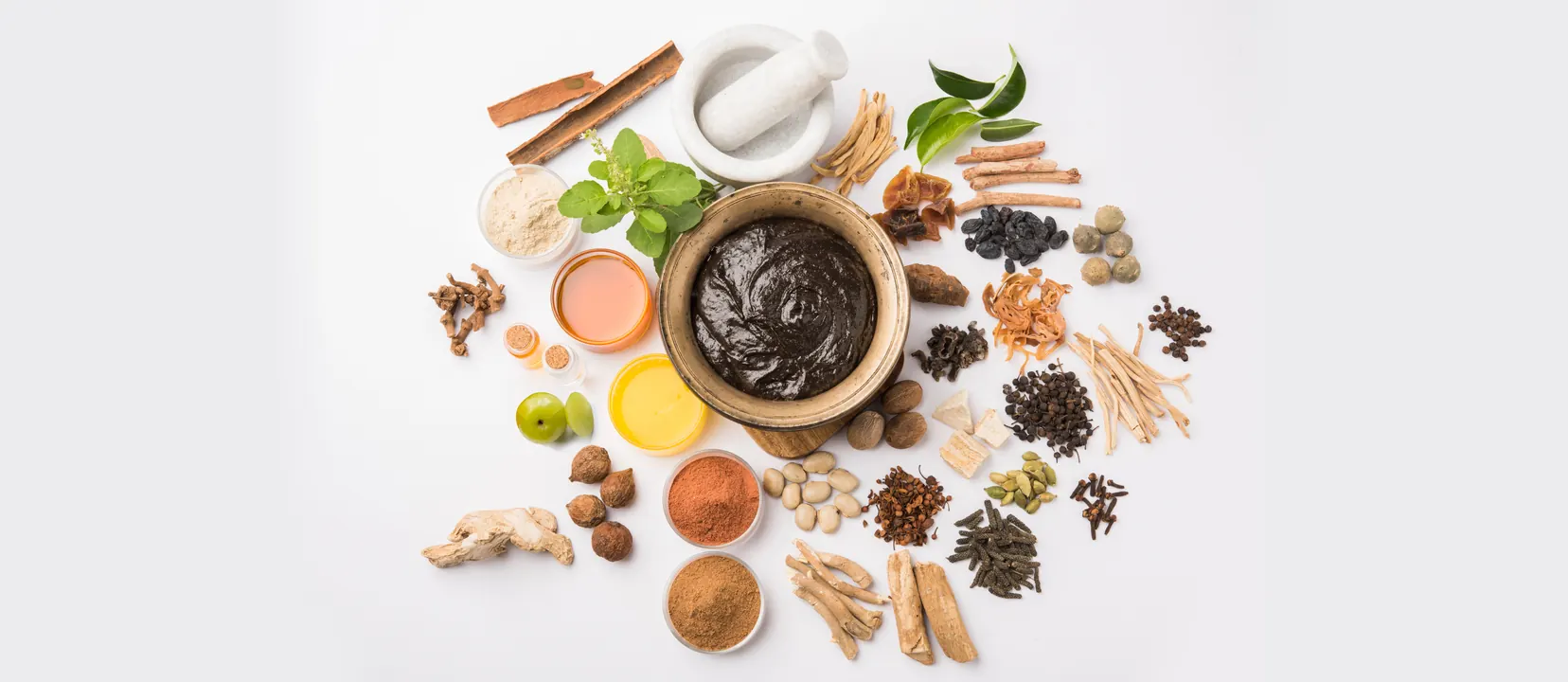
The Six Tastes of Ayurveda to
Help You Feel More Satisfied
A time-honored way to build meals that feel complete,
nourishing, and truly satisfying.
 June 10, 2025
 Wellness Tips
 7 min read
Have you ever finished a meal and still felt like something was missing, even though you were no longer hungry?
Ayurveda, a traditional system of wellness that began in India more than 3,000 years ago, offers a simple explanation: your meal may have been missing some of the six tastes. In Ayurvedic thinking, each taste plays a role in nourishing the body and mind, and a meal that includes all six tends to feel more complete.
Modern nutrition science uses different language, but the idea lines up with something researchers do observe: meals with a variety of flavors, textures, colors, and nutrients often feel more satisfying than meals built around just one or two foods.
The Six Tastes
Here is what each taste brings to the table, with everyday foods that carry it:
 Sweet: rice, oats, sweet potatoes, carrots, dates. Grounding and comforting.
- Sour: lemon, lime, yogurt, vinegar, fermented foods. Brightens a dish.
- Salty: sea salt, olives, seaweed, miso. A little lifts every other flavor.
- Bitter: leafy greens, arugula, turmeric, dark chocolate. Light and balancing.
- Pungent: ginger, garlic, onion, black pepper, chili. Warming and lively.
- Astringent: beans, lentils, apples, pomegranate, green tea. The taste that often tells us we are done.
Why Variety Feels So Satisfying
When a meal leans heavily on one or two tastes, mostly sweet and salty for example, it is common to feel full but not quite finished. That is often the moment we reach for dessert, a second helping, or something crunchy from the pantry.
Including a little of each taste naturally adds variety to the plate. Bitter and astringent foods are usually the ones missing from busy weeknight meals, and they are also the greens, legumes, and herbs that bring fiber, minerals, and helpful plant compounds.
How to Bring All Six to Your Plate
You don’t need special ingredients or complicated recipes. Start with a familiar meal and ask, “Which tastes are already here, and which could I add?”
A bowl of rice and lentils (sweet and astringent) becomes more complete with a squeeze of lemon (sour), a pinch of salt, a handful of sautéed greens (bitter), and a little ginger or black pepper (pungent). Even a simple sandwich can gain a few slices of pickle, some peppery arugula, or an apple on the side.
Ayurveda is a traditional practice, not a substitute for medical or nutrition advice. If you have a health condition or specific dietary needs, please talk with your doctor or a registered dietitian before making major changes.

Financial Transparency You Can Trust
We are committed to responsible stewardship and transparency. View our annual reports to see how your support creates change.


Be Part of the Change
When we come together, we create healthier communities
and stronger futures for everyone.